5 Essential Steps to Use Residential Proxies for Web Scraping and Price Comparison
· based on the channel Lukas Margerie
Key takeaways
- Residential proxies route requests through real home ISP IPs to avoid detection.
- VPNs use data center IPs that sites often flag, unlike residential proxies.
- Rotating residential proxies provide fresh IPs for every request to bypass blocks.
- Claude Code agent uses residential proxies for multi-country price scraping.
- DataImpulse offers reliable residential proxy networks ideal for scraping pricing data.
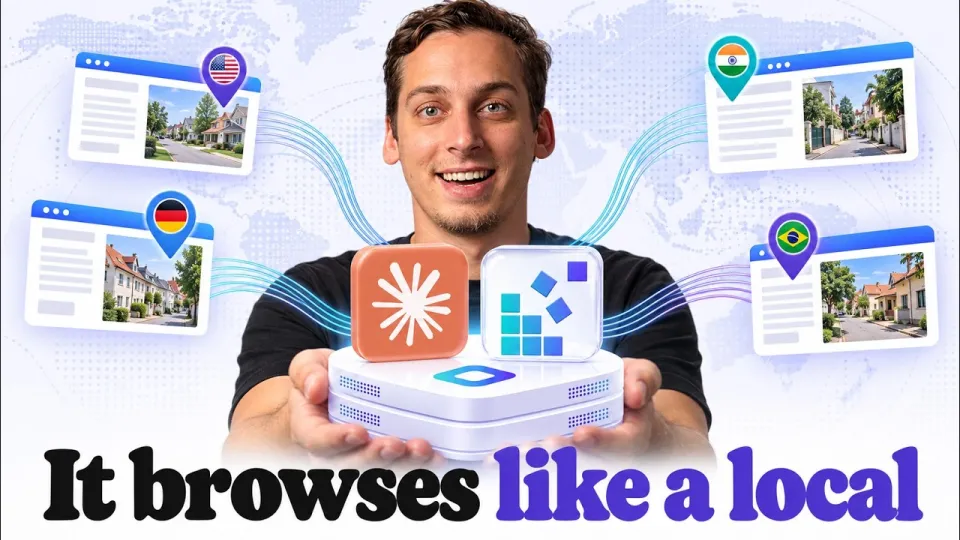
Video: This Claude Code Agent Uses Residential Proxies to Find Hidden Prices
Residential proxies are a powerful tool to access geo-targeted pricing and hidden offers by routing your web requests through real residential IP addresses rather than data center IPs. Unlike VPNs, which typically use a single data center IP that can be easily flagged, residential proxies make your connection appear as if it comes from a genuine home internet user in the target country, enabling precise web scraping and price comparison.
What Are Residential Proxies and How Do They Work
Residential proxies assign you an IP address provided by an Internet Service Provider (ISP) to a real physical location, such as a home. This makes websites see your traffic as coming from an actual user, not a server farm or bot, which helps avoid blocks and CAPTCHAs common with data center IPs. Each request sent via a residential proxy uses a different exit IP that corresponds to a real residential network, providing authenticity.
Differences Between VPNs and Residential Proxies
VPNs route all user traffic through one or more centralized servers, mostly data centers. This can lead to IP addresses being blacklisted by websites, especially for activities like web scraping. Residential proxies, on the other hand, use a distributed network of real home internet connections around the world, making it difficult for websites to detect and block scraping attempts. This distinction is crucial when trying to access region-specific pricing or content.
Rotating Residential Proxies for Efficient Web Scraping
Rotating proxies automatically assign a new residential IP address for every connection or request made. This prevents websites from detecting repetitive requests from the same IP, reducing the chance of bans or throttling. When scraping pricing pages across multiple regions, rotating residential proxies enable seamless country targeting by simulating local users in each area without manual intervention.
Using Residential Proxies to Uncover Regional Pricing
Many SaaS platforms and subscription services use geo-targeted pricing, charging different rates depending on the user's country. For example, Spotify Premium costs about $12.99 in the US but approximately $1.45 in India; Canva Pro is priced at $144 annually in the US but only $42 in India. By leveraging residential proxies in countries like the US, Germany, Brazil, and India, a Claude Code agent combined with tools like Playwright can automatically visit pricing pages from these regions and compile an accurate pricing teardown.
Practical Applications and Benefits for Businesses
Businesses selling SaaS or digital templates can use residential proxies to monitor competitor pricing and regional market differences without being blocked or misled by VPN detection. This insight allows for more informed pricing strategies and better market segmentation. Furthermore, residential proxies facilitate large-scale web scraping projects by providing stable, undetected access to target websites.
Useful Links
- DataImpulse residential proxies for reliable scraping: https://dataimpulse.com/?utm_source=youtube&utm_medium=video&utm_campaign=lukasmargerie
- Claude Code agent for automated scraping: https://www.claude.com/product/claude-code
- Playwright for browser automation: https://playwright.dev
Итог
Residential proxies provide an effective way to bypass regional restrictions and detect hidden prices by simulating real user connections from targeted countries. They outperform VPNs by reducing blocking risks and enabling rotating IP usage for scalable web scraping. The Claude Code agent, demonstrated by Lukas Margerie, showcases how to harness residential proxies to get precise multi-country price comparisons automatically. For those interested in exploring residential proxies further, DataImpulse offers a robust network to get started.
Questions & answers
What is the main difference between a VPN and a residential proxy?
A VPN routes your internet traffic through a centralized data center IP, which websites can often detect and block. A residential proxy uses real home ISP IP addresses, making your traffic appear as if it comes from genuine residential users, thus reducing the chance of blocking during activities like web scraping.
How do rotating residential proxies help in web scraping?
Rotating residential proxies assign a new IP address for each request, preventing websites from detecting repeated access from the same IP. This helps avoid bans and CAPTCHAs and allows seamless scraping across multiple regions.
Why should businesses care about regional pricing differences?
Regional pricing often reflects different economic conditions and market strategies. By understanding these differences through residential proxy-based scraping, businesses can optimize pricing, improve competitiveness, and tailor offers to specific markets.
Can I use residential proxies for personal VPN-like privacy?
Residential proxies are primarily designed for tasks like web scraping and geo-targeted access. While they provide IP addresses from real home users, they do not offer the full encryption and privacy features of VPNs, so they are not a direct substitute for personal privacy tools.
Source: This Claude Code Agent Uses Residential Proxies to Find Hidden Prices · Markdown version