5 Key Insights Into the AI Memory Shortage Impacting Data Centers
· based on the channel Computer Age
Key takeaways
- AI memory shortage mainly affects High Bandwidth Memory (HBM) production and availability.
- HBM4 development faces manufacturing challenges due to complex packaging and wafer stacking.
- Memory allocation means reserved capacity, not empty shelves or total unavailability.
- Leading suppliers include Samsung, Micron, and SK hynix, with TSMC's CoWoS packaging crucial for AI chips.
- Signs of shortage include price hikes, longer lead times, and restricted access for AI infrastructure buyers.
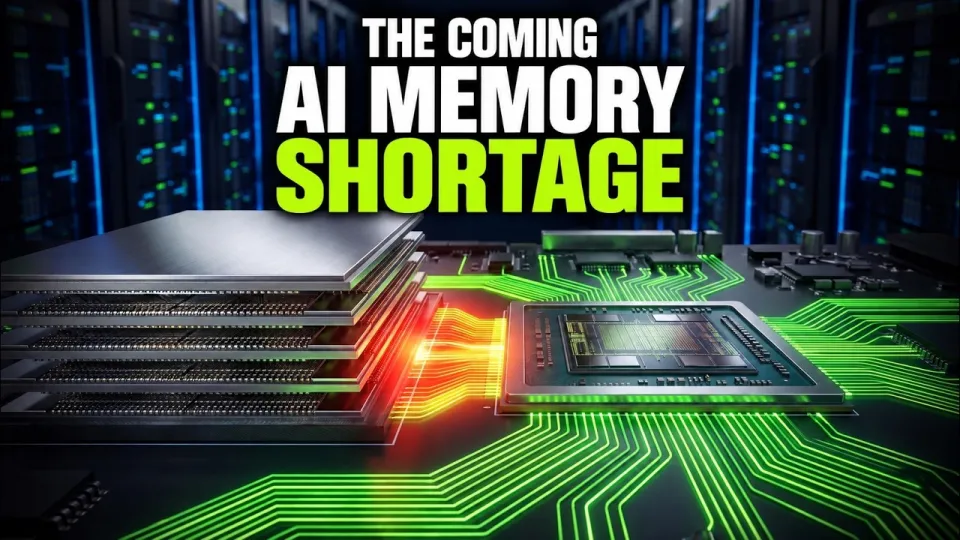
Video: The Coming AI Memory Shortage
Understanding the AI Memory Shortage
The AI memory shortage refers to the increasing scarcity and allocation constraints of crucial memory components, primarily High Bandwidth Memory (HBM), needed to support the data throughput demands of advanced AI systems. As AI models grow larger and more complex, the need for fast, high-capacity memory to feed processors has outpaced current manufacturing capabilities, creating a bottleneck that impacts AI data centers and chip manufacturers.
Why HBM is Central to the AI Memory Shortage
High Bandwidth Memory (HBM) differs significantly from traditional DRAM by offering much higher data transfer rates and lower power consumption, which are essential for AI workloads. The latest generation, HBM4, boosts bandwidth even further but is notoriously difficult to produce due to its complex 3D stacking and advanced packaging requirements. These complexities limit factory output and contribute to the shortage.
The Role of Advanced Packaging and Factory Capacity
AI chips rely heavily on advanced packaging technologies like TSMC’s Chip-on-Wafer-on-Substrate (CoWoS) to integrate HBM closely with processors. This integration improves speed but requires precise manufacturing steps that reduce throughput. Foundries and memory manufacturers face capacity constraints, leading to production allocation where memory chips are reserved for key customers rather than freely available on the market.
Signals Indicating the AI Memory Shortage
Four key indicators reveal how the AI memory shortage manifests:
- Rising Prices: Due to limited supply, memory prices, especially for HBM, have increased substantially.
- Longer Lead Times: Buyers experience delays in receiving components, sometimes months longer than usual.
- Allocation Policies: Suppliers prioritize major AI firms, restricting smaller players’ access.
- Market Volatility: Fluctuations in AI demand and semiconductor cycles can temporarily ease or worsen shortages.
Potential Easing Factors and Market Adaptation
While the shortage is pronounced now, several factors could alleviate pressure. New fab capacity for DRAM and HBM is under development but will take years to come online. Advances in packaging and alternative memory technologies might reduce reliance on HBM. Also, some AI workloads may optimize memory usage more efficiently, lessening demand growth. However, rebound effects from AI growth cycles could quickly reintroduce scarcity.
Summary
The AI memory shortage is a critical bottleneck driven by the complex manufacturing of HBM and limited factory capacity. It affects AI infrastructure deployment through higher costs, longer waits, and restricted access. Tracking price trends, lead times, allocation strategies, and market shifts helps stakeholders navigate this challenge. This analysis is based on insights from the Computer Age channel, which provides clear explanations of the technology shaping AI’s future.
Questions & answers
What causes the AI memory shortage?
The AI memory shortage is primarily caused by the high demand for High Bandwidth Memory (HBM) used in AI chips combined with the complex and capacity-limited manufacturing processes for HBM and advanced packaging.
Why is High Bandwidth Memory important for AI?
HBM provides much faster data transfer rates and lower power consumption compared to traditional DRAM, making it essential to handle the large data volumes and speed requirements of AI workloads.
What does it mean when memory production is allocated?
Allocation means that memory manufacturers reserve production capacity for specific customers, often large AI firms, limiting availability for others but not indicating a total lack of inventory on shelves.
How can the AI memory shortage impact AI development?
The shortage can lead to higher prices for memory components, longer wait times for AI hardware, and restricted access for smaller players, potentially slowing AI infrastructure deployment and innovation.